
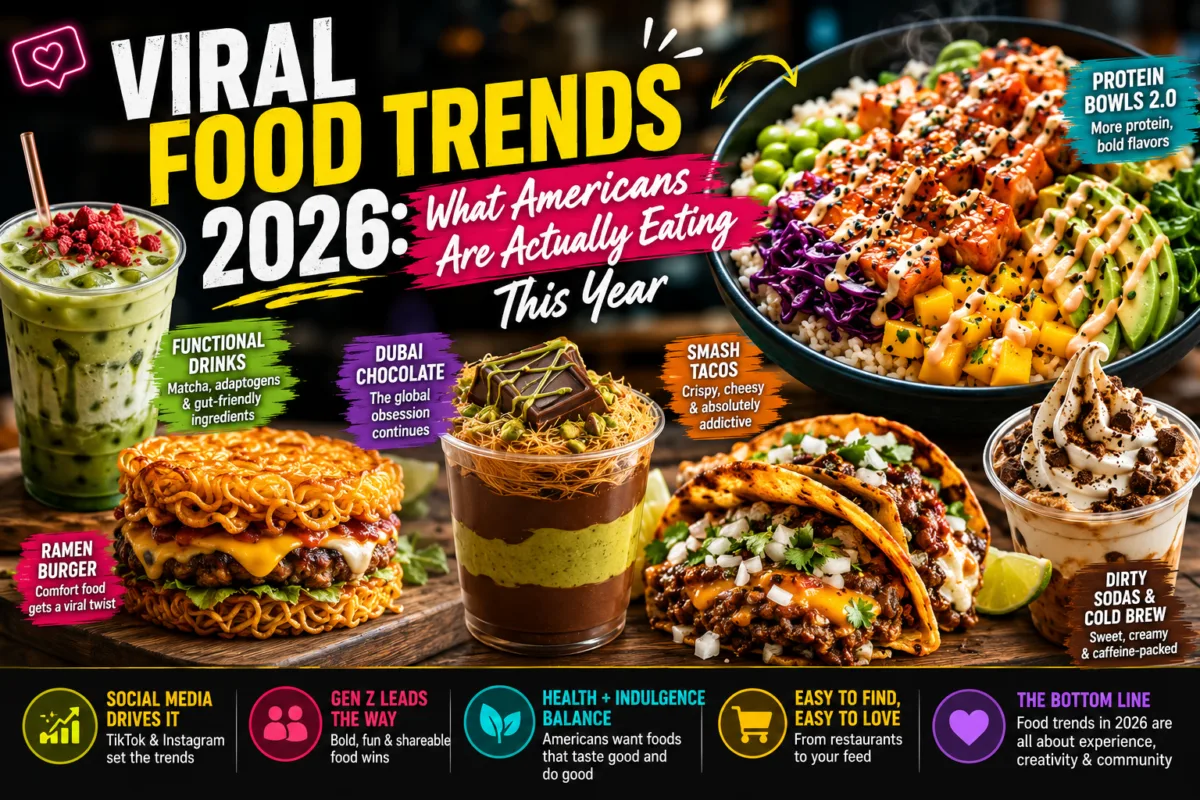


If 2025 belonged to cottage cheese, viral food trends 2026 have moved on to something a little warmer, a little more global, and noticeably more focused on the gut. Walk into any American grocery store right now and the shift is obvious: protein is still everywhere, but it has gotten cozier. Gut-health ingredients have moved from health food stores into mainstream pantries. And a humble pink fruit most Americans had never heard of two years ago is suddenly showing up in everything from fruit spreads to coffee drinks. Here is a full breakdown of what is actually trending in American kitchens this year, why it is happening, and how to make sense of it without falling for every flashy TikTok recipe that crosses your feed.
Protein Is Still King, But Now It Wants to Be Cozy
High-protein eating has dominated food culture for several years running, but 2026 has added a new dimension to the trend. As The Peach Kitchen’s roundup of viral food trends explains, protein is still queen in 2026, but now it is cozy. The shift reflects a genuine demand from home cooks: people want filling meals that support fitness goals without giving up flavor or comfort.
The practical result is a wave of high-protein comfort food, dishes that deliver the macros people are tracking while still feeling like an actual meal rather than a bodybuilding ritual. Think hearty grain bowls loaded with grilled chicken, black beans, and avocado, rather than plain chicken breast and broccoli on a sad plate. The combination of nutritional discipline and genuine comfort is exactly what has made this version of the protein trend stick around longer than most viral food moments.
Gut Health Has Gone Fully Mainstream
Gut health ingredients are no longer a niche wellness category. As the same trend roundup notes, gut health is genuinely huge right now, with kimchi, pickled onions, and yogurt-based sauces appearing everywhere across American menus and home kitchens alike. Fermented and pickled foods, once relegated to specialty grocery aisles, are now standard additions to everyday grain bowls and tacos.
This connects directly to a broader cultural shift toward digestive wellness and microbiome health that has been building for several years, accelerated by growing public awareness of the connection between gut bacteria and overall health, energy levels, and even mood. For home cooks looking to participate without overhauling their entire pantry, a simple jar of pickled red onions or a quality plain yogurt base for sauces is an easy, low-cost entry point.
Prebiotic Sodas Have Officially Gone Mass Market
One of the clearest signs that a food trend has crossed from niche to mainstream is when the biggest legacy brands in the industry start copying it. According to Taste of Home’s 2026 trend report, that moment has arrived for prebiotic beverages. Many drinks have followed the viral success of prebiotic sodas like Olipop and Poppi, and even Pepsi released a prebiotic version of its flagship soda in early 2026, with industry watchers widely expecting Coca-Cola to follow suit.
Prebiotic sodas occupy an interesting space in the beverage market: they offer the nostalgic, fizzy soda experience many Americans grew up with, while marketing themselves around fiber content and gut health benefits rather than sugar and caffeine. Whether or not the health claims fully hold up under scrutiny, the category has clearly proven there is real consumer demand for a soda that feels slightly less guilty to drink.
Guava Is Having a Genuine Moment
If there is one single ingredient defining 2026 so far, it might be guava. As Food Network’s panel of more than 30 culinary experts identified, this blushing fruit, popular throughout Latin America, Asia, and the Caribbean, tastes like a mix of strawberry and pear and plays well in savory foods, desserts, and beverages alike.
The guava wave has roots outside the kitchen entirely. Guava Girl Summer was a beauty and fashion trend in 2025 involving pink hues and fruity scents, and that aesthetic momentum has carried directly into food and drink. Dunkin collaborated with beauty brand Tarte on guava-flavored refreshers, and Trader Joe’s organic guava fruit spread went viral earlier this year. For anyone curious about the beauty side of this same pink, fruity cultural moment, our coverage of fashion and beauty trends shaping 2026 explores how aesthetic trends and food trends are increasingly feeding off each other in real time.
Tiramisu Is Getting Reinvented in Every Direction
Classic Italian desserts are having an unexpected renaissance, with tiramisu specifically getting reworked into nearly every food category imaginable. According to Food Network’s expert panel, tiramisu is popping up on trendy restaurant menus across major cities including New York, Philadelphia, and Los Angeles, and is morphing into coffee shop creations, building on Starbucks’ tiramisu latte and tiramisu cream cold foam from the previous year.
The trend reflects a broader pattern in 2026 food culture: rather than inventing entirely new flavors from scratch, brands and restaurants are taking beloved, established flavor profiles and reformatting them into new product categories. A flavor that started as a dessert can become a latte, a cookie, a yogurt, and a protein bar within the span of a single year if it catches on widely enough.
Nostalgia Food Is Back in a Big Way
2026 is shaping up to be a genuinely nostalgic year for American food and drink, driven partly by major cultural anniversaries happening simultaneously. As the Institute of Food Technologists’ trend analysis points out, 2026 brings the 250th birthday of the United States, the FIFA World Cup, Super Bowl LX, and the Winter Olympic Games, all of which create timely marketing opportunities for legacy food brands leaning into throwback products.
This pattern has already been visible in recent product launches: Pillsbury brought back its Doughboy Cookie Jar from the archives, Lenox reissued its viral Spice Village collection, and the continued popularity of Stranger Things has driven retro-packaged collaborations including Surfer Boy Pizza and themed Chips Ahoy cookies. With the NBA celebrating its 80th anniversary and Haribo turning 100 this year, expect even more blast-from-the-past product drops as 2026 continues.
Texture Wars: Is Crunchy Really Out?
One of the more entertaining debates in food media this year involves something most people never consciously think about: texture. As food writer Kim Severson discussed in a conversation about 2026 dining trends, some industry observers believe crunchy is out and creamy or velvety textures are in, while others maintain that chewy remains the dominant texture trend, following the boba tea and cheese-pull viral moments of recent years.
Whichever side of the texture debate ultimately wins out, the broader takeaway is that food trend forecasters are paying closer attention than ever to the sensory experience of eating, not just flavor and presentation. Velvety soups, like a cream of broccolini and smoked gouda, represent one direction this could take in home cooking this year, regardless of how the broader textural debate eventually settles.
Grocery Prices Are Reshaping What Goes Viral
Perhaps the most consequential food trend of 2026 has nothing to do with flavor at all. It is about cost. According to reporting on the economics behind viral cooking content, the U.S. Department of Agriculture predicted grocery store food prices would rise between 2.4 and 3.1 percent by the end of 2026 compared with the previous year, with overall grocery prices having climbed 24 percent since 2020, rising faster than the general cost of living.
This economic pressure is directly shaping which recipes actually go viral and stick around. Rather than complicated, restaurant-style techniques requiring specialty ingredients, the content spreading fastest online in 2026 tends to rely on simple techniques, affordable staples, and creative ways to stretch everyday ingredients further. Budget-conscious cooking has effectively become its own viral category, with home cooks sharing genuinely practical tips rather than purely aesthetic content.
Not Everyone Is on Board: The Backlash Against Algorithm Food
Not every voice in the food industry is celebrating these viral moments. A growing number of chefs and restaurant owners are pushing back hard against what they see as food designed purely to perform well on social media rather than to actually taste good. As one industry survey captured, chefs across the country are craving a reset rooted in flavor and intention rather than food made for the algorithm, with one restaurant founder specifically calling for an end to the viral food craze and its tendency to create long lines for slightly above-average one-hit wonders.
The criticism extends to overly complicated cocktails as well, with one spirits director noting that if a drink needs a lab coat or tastes better on Instagram than in the glass, the industry has gone too far. This pushback represents a meaningful counter-current to the viral trend machine, and it is worth keeping in mind when deciding which 2026 food trends are actually worth your time versus which ones are simply optimized for a thirty-second video.
How to Actually Use These Trends in Your Own Kitchen
With so many trends circulating simultaneously, the most practical approach is to be selective rather than chasing every viral moment. The high-protein comfort food trend and the gut-health ingredient trend are both genuinely worth incorporating into regular cooking, since they deliver real nutritional benefits alongside the trend appeal, things like grain bowls with quality protein and a side of pickled vegetables or a probiotic yogurt sauce are easy, sustainable additions to a weekly meal rotation.
Guava and tiramisu-inspired products are lower-stakes ways to try something new without committing to a full recipe overhaul, a single guava fruit spread or a tiramisu-flavored coffee creamer can scratch the trend itch without requiring a trip to a specialty grocery store. And given the genuine pressure on household grocery budgets this year, prioritizing trends that also save money, batch-cooked grain bowls, simple fermented condiments you make yourself rather than buy premium, and stretching proteins across multiple meals, will serve most American households better than chasing every flashy, ingredient-heavy recipe that goes viral for a week and disappears.
Frequently Asked Questions (FAQs)
Q1. What is the biggest viral food trend in the USA in 2026?
High-protein comfort food is widely considered the dominant trend of 2026, building on the protein-focused eating that has been popular for several years but now emphasizing cozy, satisfying dishes rather than purely functional fitness meals. Gut-health ingredients like kimchi, pickled vegetables, and yogurt-based sauces are running closely alongside it as a major trend across American kitchens.
Q2. Why is guava suddenly so popular in food and drinks?
Guava’s rise in 2026 builds on a broader pink and fruity aesthetic trend that started in beauty and fashion in 2025, known as Guava Girl Summer. Major brands including Dunkin, Trader Joe’s, and various beauty companies have released guava-flavored products, and the fruit’s versatile flavor profile, similar to a mix of strawberry and pear, works well across both sweet and savory applications.
Q3. Are prebiotic sodas actually healthy?
Prebiotic sodas like Olipop and Poppi market themselves around fiber content and gut health benefits, generally containing less sugar than traditional sodas. Major legacy brands including Pepsi have launched their own versions in 2026. While they may offer some digestive benefits compared with traditional sugary sodas, they should still be consumed as part of a balanced diet rather than treated as a health food.
Q4. How are rising grocery prices affecting food trends in 2026?
The USDA predicted grocery prices would rise 2.4 to 3.1 percent by the end of 2026, on top of a 24 percent increase since 2020. This economic pressure has shifted viral food content toward budget-friendly, practical recipes using simple techniques and affordable ingredients, rather than complicated, restaurant-style dishes requiring specialty items.
Q5. What food trends are chefs trying to leave behind in 2026?
Many chefs and restaurant owners have expressed frustration with food and drinks designed primarily to go viral on social media rather than to taste good, including overly complicated, visually elaborate cocktails and short-lived viral menu items that create long lines for what industry professionals consider mediocre food. There is a growing push within the industry toward flavor and intention over algorithm-driven novelty.
Q6. Why is nostalgia food so popular in 2026 specifically?
2026 features several major cultural anniversaries happening at once, including the 250th birthday of the United States, the FIFA World Cup, Super Bowl LX, the Winter Olympics, the NBA’s 80th anniversary, and Haribo turning 100 years old. These milestones have created strong incentives for legacy food and beverage brands to launch retro-themed and nostalgic product collaborations throughout the year.
Viral food trends 2026 paint a picture of an American food culture balancing several forces at once: a genuine desire for healthier, gut-friendly eating, a wave of global flavors like guava finding mainstream appeal, deep nostalgia tied to major cultural milestones, and very real economic pressure pushing home cooks toward practical, budget-conscious choices. Whatever ends up dominating your own kitchen this year, the trends worth keeping are usually the ones that make everyday cooking easier, healthier, or more affordable, not just the ones that look good in a fifteen-second video. For more food, lifestyle, and trend coverage shaping American life in 2026, keep reading Weblogs4u.