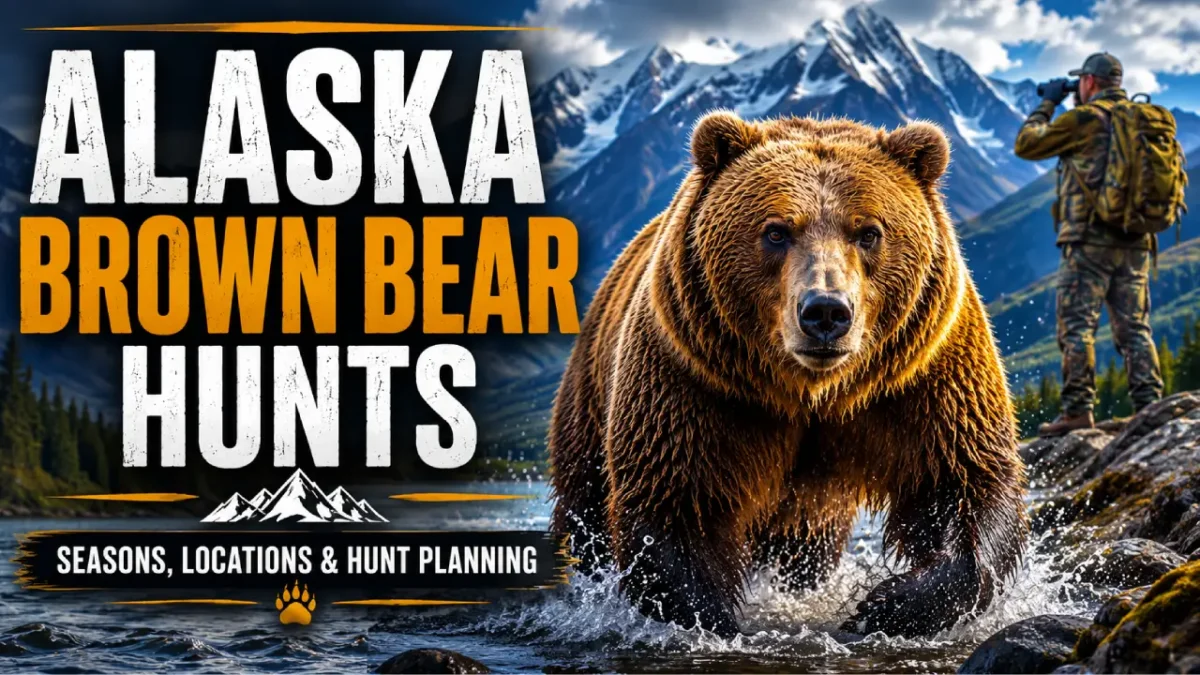

Few hunting adventures command as much respect as an Alaska brown bear hunt. These massive predators roam some of the most remote and rugged landscapes in North America, from the coastal regions of the Alaska Peninsula to the mountains of Kodiak Island. Their size, strength, and keen senses make them one of the continent’s most sought-after big game animals.
For many hunters, pursuing a brown bear in Alaska represents a once-in-a-lifetime experience. The hunt often involves traveling into remote wilderness, glassing vast landscapes, and spending days searching for a mature bear. Success requires preparation, patience, physical endurance, and an understanding of brown bear behavior.
Whether you are planning your first trip to Alaska or researching future hunting opportunities, this guide covers everything you need to know about Alaska brown bear hunts, including hunting areas, seasons, gear, regulations, costs, and hunt planning considerations.
Planning an Alaska brown bear hunt? Hunt-Nation connects hunters with trusted Alaska outfitters and hunting professionals. With more than 27 years of experience and access to over 300 outfitters, captains, and PHs worldwide, we help hunters find exceptional outdoor adventures that match their goals and hunting preferences.
Why Alaska Is Famous for Brown Bear Hunting
Alaska is home to some of the largest brown bears in the world. The state’s vast wilderness, abundant food sources, and limited human development allow bears to thrive across millions of acres of habitat.
Several factors make Alaska one of the premier destinations for brown bear hunting:
- Large bear populations
- Exceptional trophy potential
- Remote wilderness experiences
- Diverse hunting regions
- Opportunities to hunt coastal and interior bears
Many hunters spend years planning their Alaska brown bear adventure due to the unique nature of these hunts.
Understanding Alaska Brown Bears
Brown bears belong to the same species as grizzly bears, although coastal brown bears often grow significantly larger because of abundant food sources.
Brown Bear vs Grizzly Bear
Both animals belong to the same species, but regional differences exist.
Coastal brown bears typically have access to:
- Salmon runs
- Marine food sources
- Rich vegetation
These food sources often contribute to larger body size.
Size and Physical Characteristics
Mature boars can reach impressive sizes depending on location and food availability.
Brown bears are recognized by:
- Massive shoulders
- Powerful legs
- Long claws
- Exceptional strength
Their ability to cover ground quickly makes them formidable animals.
Habitat
Brown bears occupy a variety of habitats including:
- Coastal regions
- Mountain valleys
- River systems
- Tundra landscapes
- Forested terrain
Habitat use often changes seasonally as bears follow food sources.
Best Areas for Alaska Brown Bear Hunts
Alaska offers several world-renowned brown bear hunting destinations.
Kodiak Island
Kodiak Island is one of the most recognized brown bear hunting locations in the world.
Hunters are attracted by:
- Exceptional trophy potential
- Coastal habitat
- Strong bear populations
- Scenic wilderness
Many of the largest brown bears ever harvested have come from Kodiak.
Alaska Peninsula
The Alaska Peninsula is another premier destination.
Benefits include:
- Large bear populations
- Remote hunting areas
- Excellent trophy opportunities
- Fly in access
Many hunters consider the peninsula one of the best locations for mature coastal brown bears.
Katmai Region
The Katmai region supports healthy bear populations and offers a true wilderness hunting experience.
Hunters often encounter:
- Salmon streams
- Remote valleys
- Productive feeding areas
Interior Alaska
Interior Alaska provides a different style of brown bear hunting.
Compared to coastal areas, bears are often smaller but still offer exciting opportunities.
Coastal Alaska
Coastal habitats throughout Alaska support productive hunting opportunities due to abundant food resources.
Best Time for Alaska Brown Bear Hunts
Season timing plays an important role in planning.
Spring Hunts
Spring is among the most popular periods for Alaska brown bear hunts.
Advantages include:
- Bears emerging from dens
- Excellent hide quality
- Increased feeding activity
- Long daylight hours
Fall Hunts
Fall hunts occur as bears prepare for winter.
Benefits include:
- Active feeding patterns
- Cooler temperatures
- Productive hunting conditions
Many hunters appreciate the combination of beautiful scenery and strong bear activity.
Types of Alaska Brown Bear Hunts
Spot and Stalk Hunts
Spot and stalk hunting is one of the most common methods.
The process typically involves:
- Glassing large areas
- Locating bears
- Evaluating size and maturity
- Planning a careful stalk
Patience and observation are critical.
Coastal Hunts
Coastal hunts often focus on areas where bears concentrate around food sources.
These hunts may involve:
- Beach travel
- River systems
- Salmon streams
Fly In Hunts
Many fly in hunts use bush planes to access remote locations.
Advantages include:
- Reduced hunting pressure
- Access to productive habitat
- Remote wilderness experiences
Combination Hunts
Some outfitters offer combination hunts that may include:
- Brown bear and moose
- Brown bear and caribou
- Brown bear and wolf
Availability depends on local regulations and seasons.
Physical Preparation
Brown bear hunting can be physically demanding.
Hunters should prepare for:
- Long hikes
- Uneven terrain
- Mountain conditions
- Wet environments
Training before the hunt can improve both comfort and performance.
Recommended preparation includes:
- Hiking
- Strength training
- Cardio workouts
- Pack training
Essential Hunting Gear
Reliable hunting gear is important in Alaska’s challenging environment.
Rifle Recommendations
Popular calibers include:
- .300 Winchester Magnum
- .300 PRC
- .338 Winchester Magnum
- .375 H&H Magnum
Hunters should choose a rifle they shoot confidently and accurately.
Optics
Quality optics are essential.
Recommended equipment includes:
- Binoculars
- Spotting scope
- Rangefinder
Many hunts involve extensive glassing.
Rain Gear
Weather can change rapidly in Alaska.
Reliable waterproof gear is among the most important items on any packing list.
Footwear
Hunters often encounter:
- Mud
- Wet tundra
- Rocky slopes
- River crossings
Waterproof boots with strong support are essential.
Backpack
A quality pack helps carry:
- Extra clothing
- Emergency supplies
- Food and water
- Hunting equipment
Alaska Weather Challenges
Alaska weather is unpredictable.
Hunters should prepare for:
- Heavy rain
- Wind
- Cold temperatures
- Fog
- Snow
Proper preparation improves comfort and safety.
Hunt Costs
The total cost of an Alaska brown bear hunt varies depending on:
- Hunting location
- Guide services
- Transportation
- Charter flights
- Licenses and tags
- Accommodations
Remote locations generally increase logistical costs.
Guided Hunts vs DIY Hunts
Guided Hunts
Many hunters choose guided hunts because of:
- Local knowledge
- Logistics support
- Remote access
- Safety considerations
DIY Hunts
DIY hunts offer independence but require substantial planning and experience.
Hunters must manage:
- Navigation
- Transportation
- Camp logistics
- Meat and trophy care
Choosing an Alaska Outfitter
Selecting the right Alaska outfitter is an important part of hunt planning.
Look for:
- Proper licensing
- Experienced guides
- Positive references
- Quality camps
- Transparent communication
Ask detailed questions about hunting conditions, physical requirements, and included services.
Looking for a trusted outfitter for your next Alaska brown bear hunt? Hunt-Nation works with experienced hunting professionals across Alaska and beyond, helping hunters find opportunities that match their goals, timeline, and preferred hunting style.
Common Mistakes Hunters Make
Underestimating Weather
Weather changes quickly in Alaska.
Poor Physical Preparation
Mountain terrain can be more demanding than many hunters expect.
Bringing Inadequate Rain Gear
Quality waterproof equipment is essential.
Not Practicing Shooting Positions
Many opportunities occur from field positions rather than shooting benches.
Overpacking
Excess gear can become a burden in remote environments.
What Happens After the Harvest?
Proper care begins immediately after the harvest.
Trophy Care
Protecting the hide and skull is critical for taxidermy.
Meat Handling
Prompt care helps preserve meat quality.
Shipping
Discuss transportation and shipping options with your outfitter before the hunt.
Frequently Asked Questions
How big do Alaska brown bears get?
Coastal brown bears can reach impressive sizes due to abundant food sources.
What is the best area for brown bear hunting?
Many hunters consider Kodiak Island and the Alaska Peninsula among the top destinations.
What is the best season for brown bear hunts?
Both spring and fall provide excellent opportunities.
What caliber is recommended?
Popular choices include .300 Winchester Magnum, .338 Winchester Magnum, and .375 H&H Magnum.
Are guided hunts required?
Regulations vary, and many hunters choose guided hunts because of logistics and safety considerations.
How difficult are these hunts?
Difficulty depends on terrain, weather, and hunting style.
What gear should I bring?
Quality optics, rain gear, boots, and reliable firearms are essential.
How far in advance should I book?
Many popular hunts are booked well in advance, making early planning important.
Conclusion
Few hunting experiences compare to pursuing a brown bear across Alaska’s vast wilderness. From the rugged coastlines of Kodiak Island to the remote landscapes of the Alaska Peninsula, these hunts combine adventure, challenge, and some of the most spectacular scenery in North America.
Successful Alaska brown bear hunts require preparation, physical readiness, quality gear, and careful planning. Whether you choose one of many available guided hunts or begin researching future opportunities, understanding the terrain, seasons, and logistics will help you make the most of your experience.
Ready to plan your next Alaska brown bear hunt? Hunt-Nation works with trusted Alaska outfitters and hunting professionals to help hunters find trips that match their goals, budget, and preferred hunting style. With more than 27 years of experience and access to over 300 outfitters, captains, and PHs worldwide, Hunt-Nation can help you start planning your next unforgettable hunting adventure.