
A tarpon does not simply bite. It attacks. One moment your bait drifts past a bridge piling in the pre-dawn light. The next, a fish the size of a grown man explodes out of the water, a hundred pounds of silver muscle twisting through the air before crashing back down. Ernest Hemingway chased them. Entire economies in Boca Grande, Islamorada, and Tampa Bay have been built around this single species.
Tarpon fishing (Megalops atlanticus) targets what many consider the ultimate inshore gamefish, prized for explosive jumps, massive size, and a jaw that makes every hookup a genuine fight. For over 27 years, Fish-Nation has connected anglers with world class tarpon destinations, from the legendary flats of the Florida Keys to the remote jungle rivers of Costa Rica, where fish averaging 80 pounds charge through crystal clear channels beneath a canopy of jungle vines.
This guide covers the species, the seasons, the techniques anglers actually use to land one, the regulations, and how to book the right trip.
Understanding the Silver King
Tarpon are a genuinely ancient fish, changed little in roughly 100 million years, and everything about their biology explains why they are so hard to land.
Anatomy and Life History
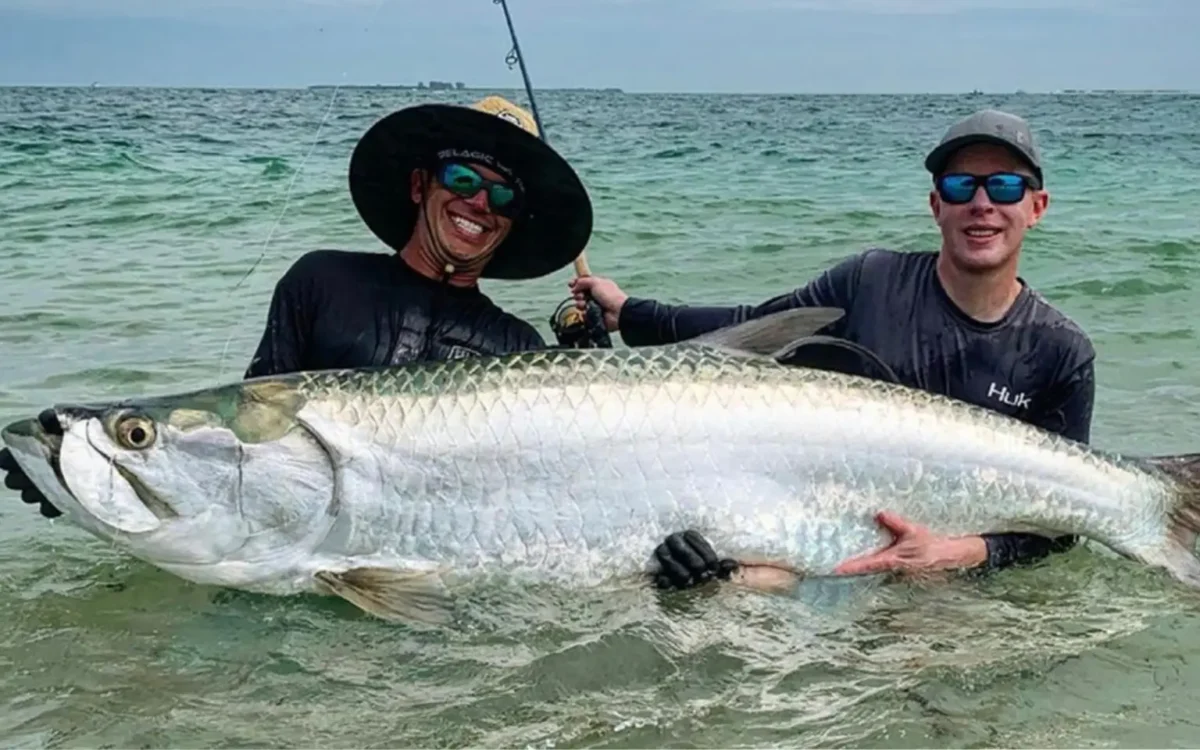
The tarpon’s armor of massive, bright silver scales, each one the size of a silver dollar on a large fish, is where the “Silver King” nickname comes from. Females can grow past 8 feet and 300 pounds, with fish in the 100 to 150 pound range considered a solid trophy for most anglers; males stay considerably smaller. Females can live over 50 years, males closer to 30, and tarpon grow slowly, not reaching sexual maturity until 7 to 13 years of age.
Two features make hookups so difficult. The hard, bony mouth has jaw plates that resist hook penetration entirely, so setting the hook takes a firm, sustained sweep rather than a sharp jerk, and even then many strikes end with the hook pulling free. The second is atmospheric air breathing: tarpon have a modified swim bladder that works like a primitive lung, letting them gulp air at the surface in a behavior called “rolling.” This gives them extraordinary stamina, and a large tarpon can fight for 30 to 90 minutes without tiring the way most saltwater fish do.
Where They Live and When to Go
Tarpon inhabit warm coastal waters, shallow flats, river mouths, and mangrove lagoons across the Atlantic, Gulf of Mexico, and Caribbean, and juveniles tolerate brackish and even fresh water. Peak season in Florida runs April through July, tracking the annual migration as water pushes past 75°F, though tarpon are available year round in the tropics. Boca Grande Pass is famous both for its concentration of fish each spring and for the crowds of boats that come with it. Costa Rica’s jungle rivers and Puerto Rico’s backwaters offer excellent tarpon fishing outside the traditional Florida calendar.
Techniques, Gear, and Booking Your Trip
Landing a tarpon comes down to reading the fish, using the right rig, and following a few rules that have not changed in decades.
Proven Techniques
Simply soaking a chunk of fresh baitfish, mullet, threadfin herring, or crabs, on the bottom near bridges, passes, and channels is one of the most reliable methods. In Boca Grande Pass specifically, jigging heavy bucktails through the current is a local specialty. On the flats, sight casting to rolling or cruising fish with flies or soft plastics is the classic technique, and juvenile tarpon in river mouths and brackish creeks are considerably easier to fool than adults, making them a good starting point for anglers new to the species.
The single most important skill is “bowing to the king.” When a hooked tarpon jumps, you must instantly drop the rod tip and give slack, since an airborne tarpon can throw a hook in midair if the line stays taut. Keeping steady pressure the rest of the fight, without horsing the fish, is what eventually wears it down.
Rigging and Gear
A typical setup starts with a Bimini twist tied to roughly 5 feet of 80 pound monofilament leader, connected with a Bristol knot to a short section of 90 pound fluorocarbon and a circle hook. Circle hooks are the standard choice because they reduce gut hooking and make releases far safer for the fish. Conventional or spinning tackle in the 20 to 30 pound class handles most tarpon, though anglers targeting fish in heavy current or structure often step up to 50 to 80 pound braided line. Because tarpon are frequently shadowed by hammerhead and bull sharks looking for an easy meal, it pays to lock down the drag and either straighten the hook or break off cleanly if a shark closes in on a hooked fish.
Regulations and Conservation
Tarpon are almost universally catch and release in the United States. Florida has required a tarpon tag to possess or kill a tarpon since the late 1980s, and in practice nearly every angler releases their catch; the species is simply too slow growing and long lived to fish for the table. Because tarpon must surface to breathe, keeping a hooked fish in the water and reviving it before release gives it the best chance of survival.
What a Trip Costs
Florida day charters generally run $700 to $1,400 for a full day, depending on boat, guide, and location. International lodge packages targeting tarpon in destinations like Costa Rica typically start around $2,500 per person and include accommodation, meals, and guided fishing.
Fish-Nation connects anglers with vetted tarpon destinations across Florida, Costa Rica, and Puerto Rico. Call 307-637-5495 or email info@fish-nation.com and our team will help match you to the right season, location, and guide.
Frequently Asked Questions
What is the best time of year to catch tarpon in Florida?
Peak season runs April through July, as warm water pushing past 75°F triggers the annual migration through the Florida Keys and up the Gulf Coast. Tarpon are available year round in tropical destinations like Costa Rica.
Why is tarpon fishing so difficult?
Their bony, hard jaw resists hook penetration, so setting the hook takes a firm sustained sweep rather than a sharp jerk, and hooks pull free often even with a good hookset. Their aerial jumps also give them a chance to throw the hook unless the angler drops the rod tip immediately, a technique called bowing to the king.
Do I need to keep a tarpon I catch?
No, and in most cases you should not. Florida requires a tarpon tag to legally possess or kill one, and nearly all recreational anglers practice catch and release since tarpon are slow growing and long lived.
What gear do I need for tarpon fishing?
Conventional or spinning tackle in the 20 to 30 pound class works for most tarpon, paired with an 80 pound monofilament leader, a short fluorocarbon section, and a circle hook. Heavier braided line in the 50 to 80 pound range is common in current or around structure.
How big do tarpon get?
Females can exceed 8 feet and 300 pounds, though 100 to 150 pounds is considered a strong trophy for most anglers. Males run considerably smaller.
Ready to plan a tarpon trip built around the right season and destination? Call Fish-Nation at 307-637-5495 or email info@fish-nation.com to get started.