
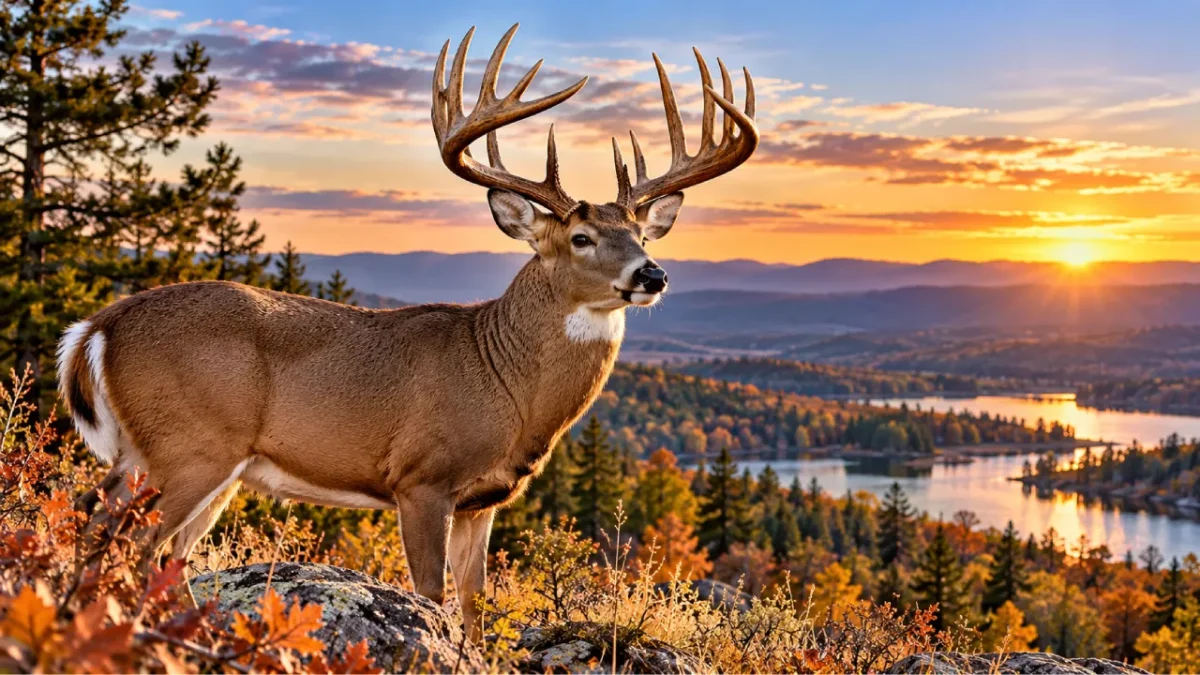


Few animals capture the attention of North American wildlife enthusiasts quite like the mature whitetail buck. With its impressive antlers, alert behavior, and ability to adapt to different landscapes, the white-tailed deer is one of the continent’s most recognizable wildlife species.
People researching trophy whitetail deer hunts often want to understand what distinguishes a mature buck, how antlers develop, and why certain regions support larger deer.
The answers involve much more than antler size alone. Age, nutrition, genetics, habitat quality, and environmental conditions all influence the development of a whitetail buck.
Understanding these factors offers valuable insight into the biology and conservation of white-tailed deer across North America.
What Makes a Trophy Whitetail Deer?
The term trophy whitetail deer generally refers to a mature buck recognized for its antler characteristics.
However, there is no single universal definition of a trophy deer.
Different wildlife organizations, land managers, and outdoor enthusiasts may use different criteria.
Common characteristics associated with mature whitetail bucks include:
- Well-developed antlers
- Greater body maturity
- Distinctive antler configuration
- Noticeable physical characteristics
- Older age compared with younger bucks
Antler size is influenced by several biological factors, but it does not provide a completely reliable indication of a deer’s age.
Some younger animals may develop impressive antlers, while older bucks may have smaller antlers because of genetics, nutrition, or environmental conditions.
Understanding Whitetail Deer Antler Growth
Antler development is one of the most fascinating aspects of whitetail deer biology.
Unlike permanent horns, deer antlers are typically shed and regrown each year.
This process requires substantial energy and nutrients.
How Antlers Develop
During the growing season, developing antlers are covered by a soft, vascular tissue known as velvet.
Velvet helps supply nutrients to the growing antlers.
As antlers mature, the underlying bone hardens and the velvet is eventually shed.
The timing of this process is influenced by hormonal changes and seasonal daylight patterns.
The Role of Genetics
Genetics influence antler characteristics, including potential size, shape, and configuration.
However, genetics alone do not determine antler development.
Environmental conditions and nutrition can substantially affect whether an individual deer reaches its biological potential.
Why Nutrition Matters
Antler development depends on adequate nutrition.
Whitetail deer obtain essential nutrients from a variety of natural foods, including leaves, shoots, grasses, agricultural crops, and seasonal mast.
Protein, minerals, and overall energy availability contribute to normal growth and development.
Healthy ecosystems that provide diverse food sources support the long-term health of deer populations.
Mature Whitetail Bucks and Age Structure
Age is another important factor in whitetail deer development.
As bucks mature, their body proportions and antler characteristics may change.
Younger bucks often have slimmer bodies and less-developed musculature.
Mature bucks generally develop heavier necks, deeper chests, and more substantial body structure.
However, these characteristics vary by individual and region.
Why Age Structure Matters
A healthy deer population contains animals from different age classes.
Population age structure can influence reproduction, competition, and overall herd dynamics.
Wildlife managers study age distribution alongside habitat conditions, reproductive success, and population density.
These measurements help agencies evaluate deer population health.
Whitetail Deer Habitat Across North America
White-tailed deer are highly adaptable animals.
They occupy forests, grasslands, agricultural landscapes, wetlands, and suburban environments.
Their ability to use different habitats has contributed to their widespread distribution.
Forested Landscapes
Forests provide food, shelter, and seasonal habitat.
Whitetail deer consume a variety of plants, including woody vegetation, leaves, and seasonal nuts.
Forest openings and areas with diverse vegetation can support additional food resources.
Agricultural Environments
Agricultural landscapes may provide access to crops and other vegetation.
However, deer populations in agricultural areas can also create challenges involving crop damage and vehicle collisions.
Mixed Woodland and Grassland Habitats
Landscapes containing both wooded areas and open vegetation can provide a variety of resources.
Habitat diversity influences deer distribution, survival, and population density.
The availability of food, water, and suitable shelter changes throughout the year.
Whitetail Deer Rut Season and Breeding Behavior
The rut is the annual breeding period for white-tailed deer.
In many northern regions of North America, breeding activity is concentrated during autumn.
However, rut timing varies geographically.
Some southern populations follow substantially different breeding schedules.
Changes in Buck Behavior
During the breeding season, bucks become more socially active.
They may display increased movement, interact with competing males, and seek receptive females.
Hormonal changes influence these seasonal behaviors.
Communication During the Rut
Whitetail deer communicate through scent, body language, and vocalizations.
Scent communication plays an important role in social interactions.
Different behaviors help deer communicate reproductive status and establish relationships within local populations.
Why Rut Timing Varies
Seasonal daylight patterns are a major influence on deer reproductive cycles.
However, latitude, local population characteristics, and environmental conditions can affect the timing of breeding activity.
For this reason, a single rut calendar does not accurately describe every whitetail deer population.
Understanding Whitetail Deer Nutrition
Nutrition is essential for healthy deer populations.
The availability and quality of natural forage influence body condition, reproduction, and antler development.
Seasonal Food Availability
During spring and summer, deer often have access to growing vegetation.
Autumn may bring additional food sources such as acorns and other mast.
Winter conditions can reduce access to nutritious forage in colder regions.
These seasonal changes influence the energy available for growth and maintenance.
Habitat Quality and Population Density
Even productive habitats have limits.
When deer populations become too dense for available resources, competition for food can increase.
Excessive browsing may also affect forest regeneration and other wildlife habitats.
Wildlife managers therefore consider both deer abundance and ecosystem health when evaluating population conditions.
Whitetail Deer Conservation and Wildlife Management
White-tailed deer are an important part of North America’s wildlife heritage.
Their populations are managed by state and provincial wildlife agencies using research, monitoring, and habitat conservation programs.
Management priorities vary by region.
Some areas focus on maintaining stable populations, while others address overabundance, habitat degradation, or disease concerns.
Habitat Conservation
Healthy deer populations depend on functioning ecosystems.
Conservation programs may involve restoring native vegetation, protecting forests, and maintaining habitat diversity.
These efforts can also benefit birds, small mammals, pollinators, and other wildlife.
Population Monitoring
Wildlife agencies use surveys, population models, habitat assessments, and biological research to evaluate deer populations.
Monitoring provides information about population trends and changing environmental conditions.
Wildlife Disease Management
Disease is an important consideration in deer conservation.
Chronic wasting disease, for example, is a serious wildlife management concern in parts of North America.
State wildlife agencies monitor disease distribution and publish guidance based on local conditions.
Reliable information is available through the U.S. Geological Survey and relevant state wildlife departments.
Why Whitetail Deer Matter to North American Ecosystems
White-tailed deer influence ecosystems through browsing, movement, and interactions with other species.
As herbivores, they affect vegetation communities and forest regeneration.
They also serve as prey for large predators in ecosystems where those predators are present.
Changes in deer population density can influence plant diversity, habitat structure, and other wildlife populations.
This is why conservation programs consider the broader ecological effects of deer populations rather than focusing only on individual animals.
Understanding Regional Differences in Whitetail Deer
Whitetail deer populations differ across North America.
Climate, vegetation, genetics, habitat productivity, and population history can all influence physical characteristics.
Deer living in northern environments may exhibit different body-size patterns from populations in warmer regions.
Antler characteristics can also vary among individuals and populations.
These differences reflect the complex interaction between biology and local environmental conditions.
Understanding regional variation helps explain why whitetail deer cannot be evaluated using one universal standard.
Explore More Wildlife Information
Readers interested in whitetail deer biology and conservation can explore educational resources from the National Deer Association and the U.S. Fish & Wildlife Service.
For broader information about outdoor destinations and experiences, visit Hunt Nation.
Learning about wildlife habitats, seasonal behavior, and conservation contributes to a greater understanding of North America’s natural landscapes.
Frequently Asked Questions
1. What makes a whitetail deer a trophy buck?
A trophy whitetail buck is generally recognized for its maturity and distinctive antler characteristics. However, definitions vary, and antler size alone does not reliably determine a deer’s age.
2. What factors influence whitetail deer antler size?
Age, genetics, nutrition, and environmental conditions all influence antler development. Healthy habitat and adequate nutrition are particularly important for normal growth.
3. When is the whitetail deer rut?
In many northern regions, the rut occurs during autumn, often around November. However, timing varies considerably across North America, particularly in southern populations.
Final Thoughts
Trophy whitetail deer represent an interesting intersection of wildlife biology, habitat quality, genetics, and environmental conditions.
The impressive antlers of mature bucks are only one part of a much broader ecological story.
Understanding antler growth, age structure, seasonal behavior, and habitat requirements provides a deeper appreciation for these animals.
Long-term conservation depends on healthy ecosystems, scientific monitoring, and responsible wildlife management.
By learning more about white-tailed deer and their habitats, readers can better appreciate one of North America’s most recognizable wildlife species.