
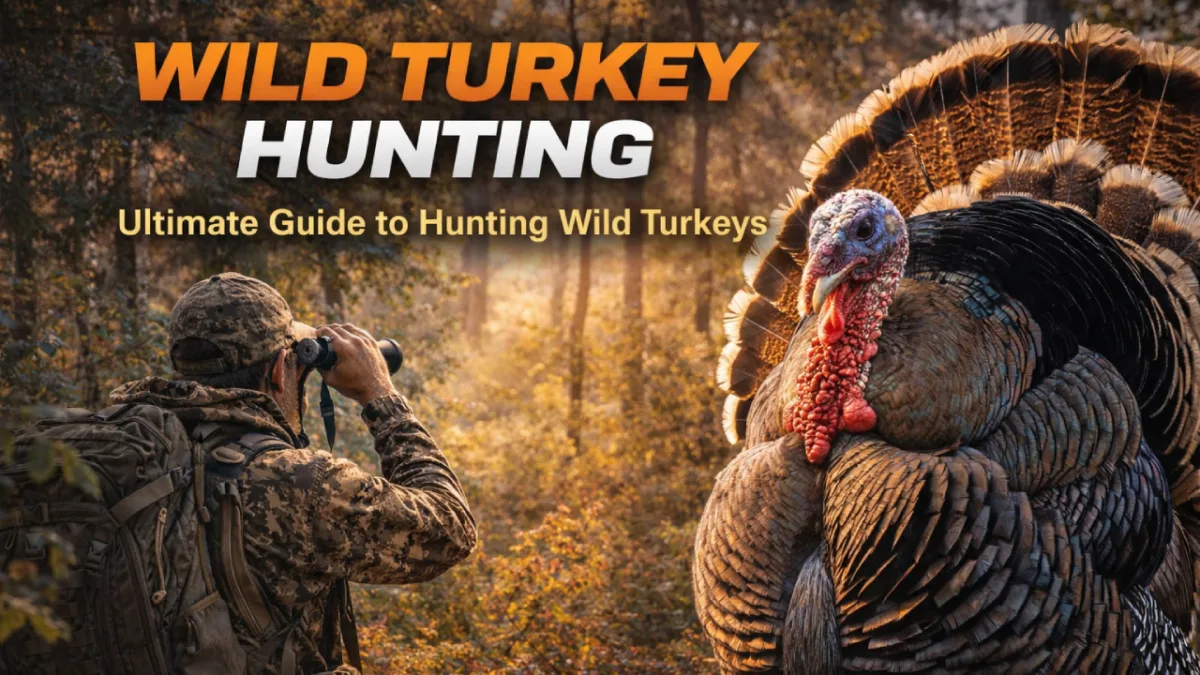

Wild turkey hunting is one of the most exciting and challenging forms of hunting in North America. Known for their keen eyesight, sharp hearing, and unpredictable behavior, wild turkeys offer hunters a thrilling experience that requires patience, strategy, and skill.
Each year thousands of hunters head into forests, fields, and mountains hoping to outsmart one of the most cautious birds in the wild. Whether you’re new to hunting or an experienced outdoorsman, learning the fundamentals of hunting wild turkeys can greatly improve your chances of success.
In this guide, we’ll cover everything you need to know about wild turkey hunting, including the best seasons, essential gear, hunting strategies, and tips for calling in a gobbler.
Understanding Wild Turkeys
Wild turkeys are large birds native to North America and are well known for their sharp senses and wary behavior. A mature male turkey, called a gobbler or tom, can weigh between 15 and 25 pounds and has distinctive features such as a beard, fan-shaped tail, and colorful head.
Turkeys rely heavily on their excellent eyesight and hearing to detect predators. Because of this, hunters must remain extremely still and well concealed.
Common wild turkey species hunted in North America include:
-
Eastern Wild Turkey
-
Rio Grande Turkey
-
Merriam’s Wild Turkey
-
Osceola Turkey
-
Gould’s Turkey
Many hunters travel across the country pursuing different subspecies, especially during Merriam wild turkey hunts in western states.
Best Seasons for Wild Turkey Hunting
Turkey hunting seasons vary by state, but they generally occur during spring and fall.
Spring Turkey Season
Spring is the most popular time for wild turkey hunting because gobblers become highly vocal during breeding season.
Hunters use turkey calls to mimic hens and attract male turkeys looking for mates.
Spring season advantages include:
-
Increased gobbling activity
-
Easier calling opportunities
-
Active breeding behavior
Fall Turkey Season
Fall turkey hunting focuses more on scouting and locating flocks.
During fall hunts, hunters often scatter turkey flocks and then use calls to regroup birds.
Both seasons offer unique challenges and rewards.
Best States for Wild Turkey Hunting
Wild turkeys can be found across much of the United States, but some states offer particularly excellent hunting opportunities.
Popular turkey hunting destinations include:
-
Texas
-
Kansas
-
Nebraska
-
Missouri
-
Minnesota
-
South Dakota
For example, wild turkey hunting in MN is popular due to the state’s strong turkey population and diverse habitats.
Western states also offer outstanding opportunities for Merriam wild turkey hunts in mountainous terrain.
Essential Gear for Wild Turkey Hunting
Successful wild turkey hunting requires specialized gear designed to help hunters stay concealed and call birds effectively.
Key equipment includes:
Shotgun or Bow
Most turkey hunters use a 12-gauge shotgun with turkey loads designed for tight shot patterns.
Turkey Calls
Turkey calls are essential for attracting gobblers.
Common types include:
-
Box calls
-
Slate calls
-
Diaphragm mouth calls
-
Push-button calls
Camouflage Clothing
Turkeys have exceptional vision, so full camouflage including gloves and face masks is important.
Decoys
Turkey decoys help create realistic scenarios that attract curious gobblers.
Binoculars
Optics help locate birds from a distance without alerting them.
How to Hunt Wild Turkey Successfully
Learning how to hunt wild turkey requires patience and practice. The following techniques can greatly increase your success rate.
1. Scout Before the Hunt
Successful hunters spend time scouting areas to locate turkey roosts, feeding areas, and travel routes.
Look for signs such as:
-
Tracks
-
Droppings
-
Feathers
-
Scratching in leaves
2. Set Up Near Roosting Areas
Turkeys often roost in trees at night and fly down early in the morning.
Position yourself near known roost areas before sunrise for the best opportunity.
3. Use Realistic Turkey Calls
Calling is one of the most important skills when learning how to hunt wild turkeys.
Common turkey sounds include:
-
Yelp
-
Cluck
-
Purr
-
Gobble
The goal is to mimic a hen turkey to attract a curious gobbler.
4. Stay Still and Patient
Turkeys have extremely sharp eyesight. Even small movements can scare them away.
Once a gobbler is approaching, remain still and let the bird come within shooting range.
5. Hunt Early Morning
Early morning is often the most productive time for wild turkey hunting because birds are active after flying down from roosts.
However, midday hunts can also be productive when gobblers begin searching for hens.
Popular Types of Wild Turkey Hunts
Different styles of turkey hunting offer unique experiences.
Guided Turkey Hunts
Many hunters book guided wild turkey hunting trips with professional outfitters who know the best hunting locations.
DIY Public Land Hunts
Public land hunting allows hunters to explore forests and wildlife areas on their own.
Merriam Wild Turkey Hunts
These hunts take place in western states like Wyoming, Montana, and South Dakota where Merriam’s turkeys inhabit mountainous terrain.
Tips for Successful Wild Turkey Hunting
To improve your chances of harvesting a turkey, consider these expert tips:
-
Practice turkey calling before the season
-
Hunt areas with strong turkey populations
-
Use realistic decoy setups
-
Stay concealed and minimize movement
-
Learn turkey behavior and vocalizations
Understanding turkey habits is one of the most important factors for success.
Why Hunters Love Wild Turkey Hunting
Wild turkey hunting offers a unique challenge compared to other types of hunting.
Hunters enjoy:
-
The excitement of calling gobblers
-
Beautiful spring landscapes
-
Challenging and intelligent game birds
-
Opportunities to hunt across North America
For many outdoorsmen, turkey season is one of the most anticipated hunting seasons of the year.
Frequently Asked Questions About Wild Turkey Hunting
What is the best time of day to hunt wild turkeys?
Early morning is typically the most productive time because turkeys leave their roosts and begin feeding.
What gun is best for turkey hunting?
Most hunters prefer a 12-gauge shotgun with specialized turkey loads.
Can beginners hunt wild turkey?
Yes. Turkey hunting is beginner-friendly, but it requires patience and learning calling techniques.
What is the best strategy for turkey hunting?
Scouting, proper calling, and remaining well concealed are the most effective strategies.
Final Thoughts
Whether you’re chasing gobblers in the woods or calling birds across open fields, wild turkey hunting is one of the most exciting and rewarding hunting experiences available.
By learning turkey behavior, practicing effective calling techniques, and preparing with the right gear, hunters can greatly increase their chances of success in the field.
For many hunters, the thrill of hearing a gobbler respond to a call is what makes hunting wild turkeys such an unforgettable adventure.