
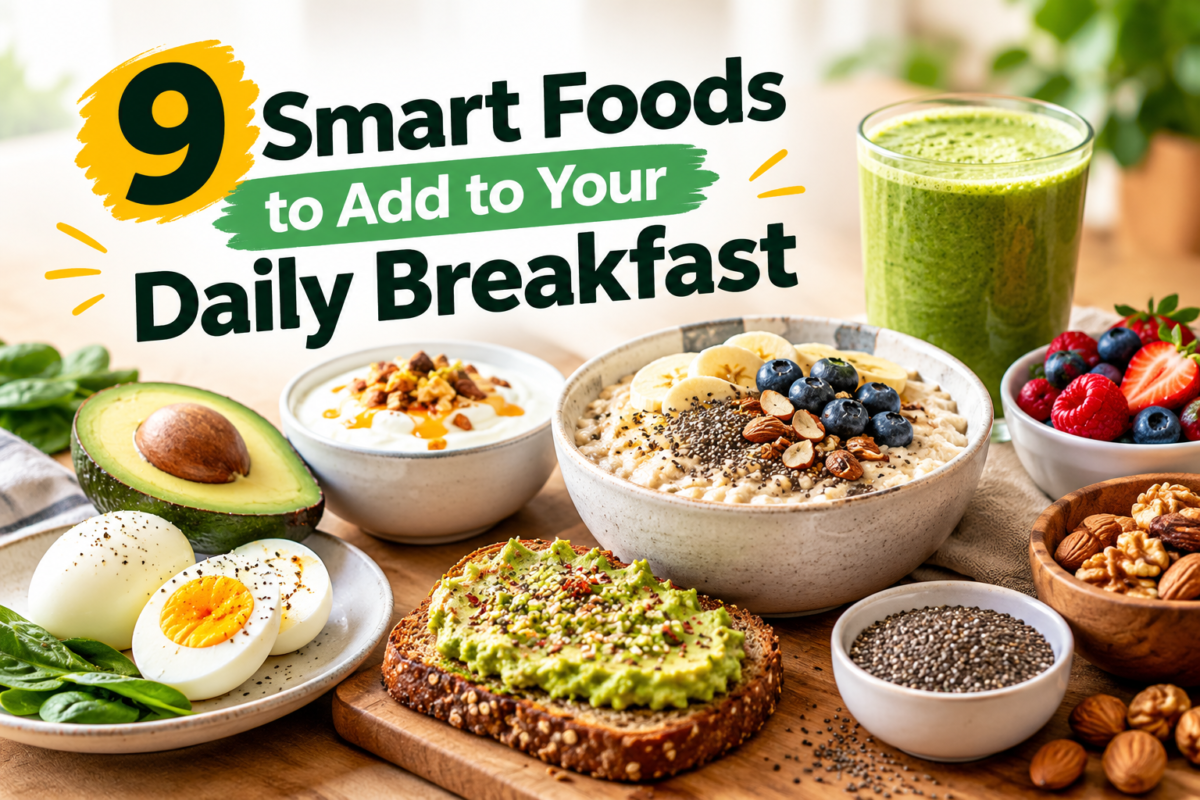


Breakfast does not have to be complicated.
You do not need a fancy smoothie, expensive cereal, or a long list of supplements to make your first meal better.
A good breakfast can be quite simple. What matters is what you put on the plate and whether it keeps you satisfied until your next meal.
For example, tea and biscuits may be quick. But you may feel hungry again within a couple of hours.
Add some protein, fibre and healthy fats, and the same morning can feel very different.
So, what should you actually eat?
Here are nine smart foods you can add to your daily breakfast, along with easy ways to include them in an Indian diet.
What Makes a Breakfast Healthy?
Before choosing individual foods, think about what your breakfast is missing.
A balanced breakfast can include:
- Protein
- Fibre
- Healthy fats
- Whole-food carbohydrates
- Vitamins and minerals
You do not need every nutrient in exact amounts at every meal.
The bigger picture matters.
For example, a bowl of oats becomes more filling when you add nuts, seeds, curd or milk and some fruit.
A vegetable poha becomes more balanced when you add peanuts, sprouts or curd.
Small additions can change the nutritional value of a familiar meal.
Foods to Add to Your Daily Breakfast
1. Eggs
Eggs are one of the easiest ways to add protein to breakfast.
They are also versatile. You can boil them, make an omelette, prepare egg bhurji or add them to a sandwich.
One large egg provides around 6 grams of protein.
That can be useful if your usual breakfast contains mostly carbohydrates.
Try these combinations:
- Vegetable omelette with whole-grain toast
- Boiled eggs with poha
- Egg bhurji with roti
- Egg sandwich with vegetables
If you eat eggs, they can be a convenient breakfast option.
If you do not, there are plenty of plant-based choices too.
2. Oats
Oats are an easy option when you want a quick breakfast.
They contain soluble fibre, including beta-glucan. Fibre can help support digestive health and may help you feel satisfied after eating.
But plain oats can feel a little boring.
That is where toppings help.
Try adding:
- Chia seeds
- Almonds
- Walnuts
- Pumpkin seeds
- Apple
- Banana
- Plain curd
- Milk
Avoid turning your breakfast into a dessert with large amounts of sugar, chocolate syrup or sweetened sauces.
If you like a savoury breakfast, try vegetable oats with carrots, peas, beans and spices.
It takes only a few changes to make oats fit your usual Indian meals.
3. Chia Seeds
Chia seeds are small, but they contain fibre, healthy fats and other nutrients.
You do not need a large quantity.
Add them to:
- Overnight oats
- Plain curd
- Smoothies
- Homemade chia pudding
- Fruit bowls
One simple option is to mix chia seeds into curd and add chopped fruit and a few nuts.
That gives you a breakfast with different textures and nutrients.
If you are new to chia seeds, start with a small amount and make sure you drink enough fluids during the day.
4. Curd
Plain curd can make a useful addition to breakfast, especially if you prefer Indian foods.
It provides protein and calcium, and fermented dairy foods can contain live cultures.
You can have curd with:
- Vegetable poha
- Stuffed paratha
- Moong dal chilla
- Oats
- Fruit
- Homemade granola with limited added sugar
Choose plain curd instead of flavoured versions if you are trying to reduce added sugar.
Want something more filling?
Add nuts or seeds.
The combination can work much better than eating a sweetened yogurt product on its own.
5. Nuts
Almonds, walnuts, pistachios and other nuts can add healthy fats, protein, fibre and minerals to breakfast.
You only need a small portion.
Try:
- Almonds with oats
- Walnuts with fruit
- Chopped nuts over curd
- Nuts mixed into a homemade breakfast bowl
Nuts are nutrient-dense, so eating directly from a large packet can make it easy to lose track of the amount.
A small bowl or measured portion is a simple way to keep things practical.
6. Bananas
Bananas often get misunderstood because they contain natural sugar.
But whole fruit is different from foods with added sugar.
A banana provides carbohydrates, fibre and potassium. It can be especially convenient when you are rushing out in the morning.
You can add banana to:
- Oats
- Curd
- Peanut butter toast
- Smoothies
- Homemade pancakes
If you feel hungry soon after eating fruit alone, pair it with protein or healthy fats.
For example:
Banana + plain curd
or
Banana + a small amount of unsweetened peanut butter
This makes a more satisfying breakfast.
7. Moong Dal
If you prefer savoury Indian breakfasts, moong dal deserves more attention.
It is a good source of plant protein and can be used in several simple recipes.
Moong dal chilla is an easy example.
You can add:
- Onion
- Tomato
- Coriander
- Grated carrot
- Spinach
- Green chilli
Serve it with plain curd or a vegetable side.
Another option is sprouted moong mixed with vegetables for a quick breakfast bowl.
This is a good example of using familiar Indian ingredients instead of searching for expensive “health foods.”
8. Pumpkin Seeds
Pumpkin seeds are an easy way to add extra crunch to breakfast.
They provide protein, healthy fats and minerals such as magnesium and zinc.
You can sprinkle them over:
- Oats
- Curd
- Fruit
- Smoothie bowls
- Homemade trail mixes
You can also add them to a vegetable poha or upma.
Again, you do not need a huge amount.
A small serving can add texture and nutrients without changing your breakfast completely.
9. Whole-Grain Bread
Bread is not automatically unhealthy.
The type you choose matters.
Whole-grain bread generally provides more fibre than refined white bread.
The bigger issue is what you put on it.
Instead of making breakfast mostly bread and jam, add a protein source.
Try:
- Whole-grain toast + eggs
- Whole-grain toast + peanut butter
- Whole-grain toast + paneer
- Whole-grain toast + vegetable omelette
- Whole-grain toast + avocado and egg
Read the ingredient list when buying packaged bread. Look for products where whole grains are a main ingredient and compare the fibre content between brands.
How to Build a Better Breakfast
You do not have to eat all nine foods every morning.
That would get boring quickly.
Instead, combine two or three food groups.
Here are a few examples.
Option 1: High-Protein Indian Breakfast
- Moong dal chilla
- Plain curd
- One fruit
Option 2: Quick Breakfast
- Oats
- Milk or curd
- Chia seeds
- Banana
Option 3: Egg Breakfast
- Vegetable omelette
- Whole-grain toast
- Fruit
Option 4: Vegetarian Breakfast
- Vegetable poha
- Peanuts
- Plain curd
Option 5: Simple Breakfast Bowl
- Plain curd
- Oats
- Chia seeds
- Apple
- Walnuts
These combinations do not require complicated cooking.
That is a big part of making a breakfast routine work in real life.
What About Tea and Coffee?
You do not have to stop drinking tea or coffee because you want a healthier breakfast.
The issue is what goes along with them.
If your usual breakfast is:
Tea + biscuits + nothing else, you may be missing protein and fibre.
Try having tea with a proper meal instead.
For example:
- Vegetable poha + tea
- Egg sandwich + tea
- Moong chilla + tea
- Oats + tea
Also keep an eye on added sugar if you drink several cups a day.
Common Breakfast Mistakes
Eating only carbohydrates
Poha, bread, cereal or paratha can all be part of breakfast.
The problem is when the meal contains almost no protein or fibre.
Add eggs, curd, dal, paneer, sprouts, nuts or seeds depending on your preferences.
Skipping breakfast and overeating later
Not everyone needs breakfast.
Some people naturally prefer a later first meal.
But if skipping breakfast leaves you extremely hungry and reaching for sugary snacks later, changing your meal timing may help.
Choosing packaged “healthy” foods without checking the label
Granola, flavoured yogurt, breakfast bars and cereals can contain added sugar.
Check the nutrition label instead of relying only on the front of the packet.
Making breakfast too complicated
If your breakfast takes an hour to prepare, you may stop making it after a few days.
Keep a few quick options ready.
Boiled eggs, curd, fruit, nuts and overnight oats can save time.
How a Professional Nutritionist Can Help You Plan Breakfast
No single breakfast works for everyone.
Your ideal breakfast depends on your food preferences, schedule, activity level and health needs.
A Professional Nutritionist can look at your complete eating pattern instead of focusing on one meal.
For example, if you have a desk job and usually feel hungry at 11 am, your breakfast may need more protein and fibre.
If you exercise in the morning, your meal timing and food choices may be different.
If you follow a vegetarian diet, you may need to pay more attention to your protein sources throughout the day.
This is where personalised nutrition advice can be useful.
Mitha Aahara and Practical Nutrition
At Mitha Aahara, the focus can be on making everyday nutrition easier to follow.
Instead of asking you to completely change the foods you already eat, a nutrition professional can help you make sensible additions and adjustments.
Your breakfast could still include poha.
You could still have paratha.
You could still enjoy your morning tea.
The goal is to make the overall meal more balanced and suitable for your needs.
7 Easy Breakfast Combinations to Try This Week
If you want some variety, try these combinations.
Monday
Vegetable poha + peanuts + curd
Tuesday
Moong dal chilla + curd + fruit
Wednesday
Oats + milk + chia seeds + banana
Thursday
Vegetable omelette + whole-grain toast
Friday
Curd + oats + walnuts + apple
Saturday
Paneer sandwich + vegetables
Sunday
Egg bhurji + roti + fruit
You can change the portions according to your hunger and individual needs.
There is no need to follow the same breakfast every day.
Frequently Asked Questions
- What are the best foods to eat for breakfast every day?
There is no single best breakfast food. Eggs, oats, curd, nuts, seeds, fruit, moong dal and whole grains are useful options. Try combining protein, fibre and healthy fats rather than relying on one food.
- Is eating oats every day healthy?
Oats can be part of a healthy diet for many people. They provide carbohydrates and fibre, including beta-glucan. Add protein and healthy fats such as curd, milk, nuts or seeds to make the meal more balanced.
- Can I eat bananas for breakfast?
Yes. Whole bananas provide carbohydrates, fibre and potassium. If fruit alone does not keep you full, combine a banana with curd, nuts, seeds or peanut butter.
- Is poha a healthy breakfast?
Poha can fit into a balanced breakfast. Add vegetables and a protein or nutrient-rich accompaniment such as peanuts, sprouts, curd or eggs based on your dietary preferences.
- What is a good vegetarian breakfast?
Moong dal chilla with curd, vegetable poha with peanuts, oats with milk and nuts, or a paneer sandwich can work well. Try to include a protein source rather than making breakfast mostly grains.
A Simple Breakfast Rule to Remember
You do not need to make breakfast perfect.
Just ask yourself three questions:
Where is my protein?
Where is my fibre?
What whole food can I add?
Maybe the answer is eggs, vegetables and toast.
Maybe it is moong dal chilla with curd.
Maybe it is oats with chia seeds, nuts and fruit.
The best breakfast is often the one you can actually prepare, enjoy and repeat.
If you want help creating a breakfast routine around your specific needs, a Professional Nutritionist can help you make the choices more personal and practical.