
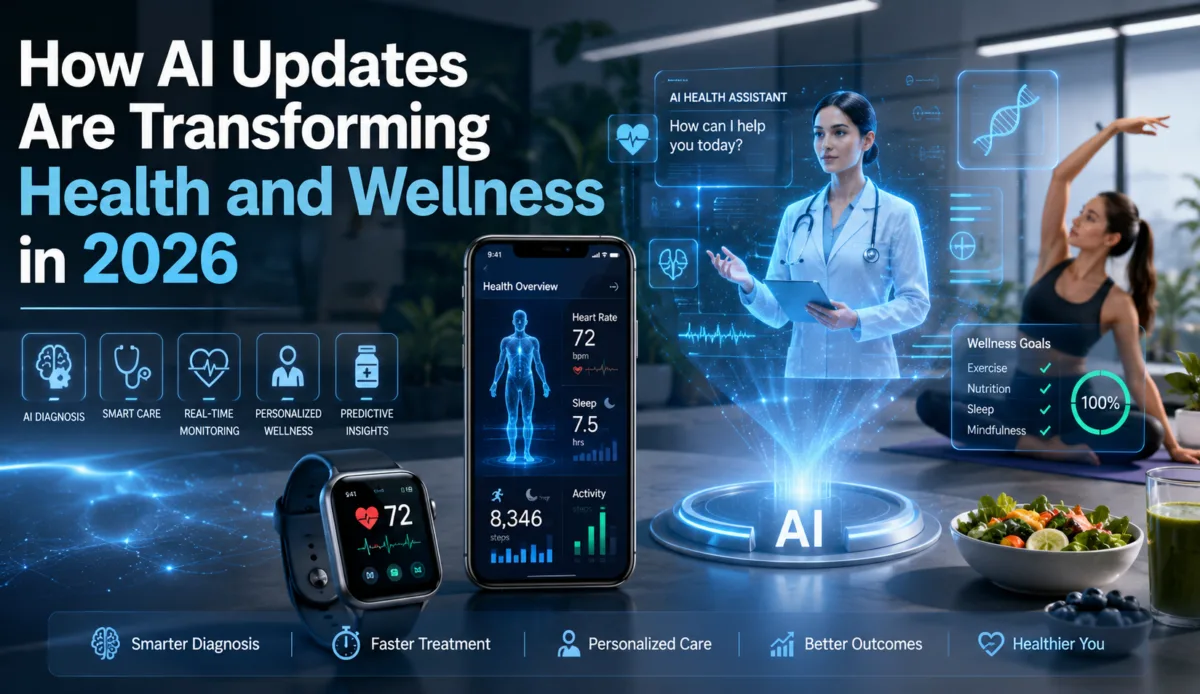


How AI Updates Are Transforming Health and Wellness in 2026
Artificial intelligence is no longer something reserved for tech labs and Silicon Valley boardrooms. In 2026, AI has moved into hospitals, fitness apps, therapy sessions, and even your bathroom scale. For everyday Americans, this shift is not just a tech trend but a real change in how they manage their bodies, their stress, and their long-term wellbeing.
From doctors using AI to catch diseases earlier to fitness apps that build custom workout plans in seconds, the health space is being reshaped at a pace nobody fully predicted. This article breaks down the biggest AI updates hitting the health and wellness world right now, and what they mean for you.
AI Diagnostics Are Getting Scarily Accurate
One of the most talked-about AI updates in healthcare this year is the leap in diagnostic accuracy. AI models trained on millions of patient records, scans, and lab results are now outperforming human doctors in specific areas like radiology and dermatology.
Skin Cancer Detection
In 2026, several FDA-cleared AI tools can analyze a photo of a skin lesion and flag potential melanoma with over 90 percent accuracy. Dermatology offices across the US are using these tools as a first filter before a doctor even enters the room. This does not replace the physician, but it dramatically speeds up the process and reduces the chances of something being missed.
Heart Disease Screening
AI-powered EKG analysis is now available through consumer apps. Tools like those built into newer Apple Watch models and competing wearables can detect irregular heart rhythms and alert users to visit a cardiologist before symptoms even show up. The American Heart Association has acknowledged these tools as meaningful in catching early-stage atrial fibrillation in patients who would have otherwise been missed.
Smart Wearables Have Crossed a New Threshold
Fitness trackers used to count steps. Now they monitor blood oxygen, stress hormone levels through skin response, sleep cycles down to the minute, and even early markers of blood sugar fluctuation. The latest AI updates in wearable tech mean these devices are not just collecting data but actually interpreting it.
Personalized Health Coaching on Your Wrist
Brands like Garmin, Fitbit, and WHOOP have integrated AI coaching engines that analyze weeks of your personal data and then give you specific recommendations. Not generic ones like “drink more water” but tailored ones like “your recovery score has dropped three days in a row, reduce your training intensity today and prioritize sleep before Thursday.”
For Americans dealing with chronic conditions like high blood pressure or type 2 diabetes, this level of personalized feedback used to require multiple doctor visits per month. Now it lives on a wrist.
Sleep AI Is Changing How America Rests
Poor sleep costs the US economy over 400 billion dollars a year according to estimates from the RAND Corporation. AI-powered sleep tracking apps have become sophisticated enough to detect signs of sleep apnea and recommend users get a formal sleep study done. Some platforms pair with smart mattresses to automatically adjust firmness and temperature based on your sleep stage, guided by AI analysis of your movement and breathing patterns.
Mental Health Support Gets an AI Upgrade
Mental health is one of the most underfunded and under-resourced areas of American healthcare. AI is stepping in to fill some of the gap.
AI Therapy Apps Are Going Mainstream
Apps like Woebot, Wysa, and newer entrants in 2026 use conversational AI to guide users through cognitive behavioral therapy techniques. These are not chatbots making things up. They are clinically validated tools that have been shown in peer-reviewed studies to reduce anxiety and depression symptoms in mild to moderate cases.
For Americans who cannot afford therapy or face a six-week waitlist for a therapist, these tools offer something real. They are not a replacement for human mental health professionals, but they are a meaningful bridge.
Burnout Detection in the Workplace
Several US employers have started rolling out AI wellness platforms that analyze anonymized patterns such as calendar overload, late-night emails, and skipped breaks to flag employees showing burnout signs. These systems do not spy on individuals but give HR teams aggregate data to act on before they start losing people to exhaustion-related resignations or health crises.
AI-Powered Nutrition and Diet Tracking
Counting calories manually never worked long-term for most people. AI has now made nutrition tracking effortless and far more accurate.
Snap a Photo, Get a Nutrition Breakdown
Apps now allow users to photograph their meal and receive a detailed breakdown of macros, micronutrients, and potential allergens within seconds. The AI is trained on millions of food images and cross-referenced with USDA nutritional databases. For people managing weight, diabetes, or food sensitivities, this removes one of the biggest friction points in staying on track.
Personalized Meal Plans Based on Your Biology
Companies offering at-home gut microbiome testing have now integrated AI to turn those results into personalized meal recommendations. Your gut profile, combined with your fitness data and health goals, feeds into an AI that builds a weekly meal plan designed specifically for your biology. This type of personalized nutrition guidance used to cost thousands of dollars and require a registered dietitian. In 2026, it is available as a monthly subscription.
What These AI Updates Mean for the Average American
Most people are not following AI news closely, but the changes are already touching their lives. Their insurance company may be using AI to flag high-risk patients for outreach. Their pharmacy app may be using AI to check drug interactions. Their doctor may be using an AI-assisted scribe that transcribes and summarizes appointments so the physician can focus on the patient instead of paperwork.
The bottom line is that healthcare in America is becoming faster, more personalized, and in many ways more accessible thanks to these AI updates. The challenges around data privacy, algorithmic bias, and over-reliance on technology are real and worth watching. But for most Americans willing to engage with these tools thoughtfully, the health outcomes on offer in 2026 are genuinely better than they were just three years ago.
FAQs
Are AI health tools safe to use?
Most AI health tools available to US consumers have gone through FDA review or are built in compliance with HIPAA data protection rules. They are generally safe to use as supplements to regular medical care, not as replacements.
Can AI replace my doctor?
No. AI assists doctors and helps patients stay more informed, but clinical judgment, human context, and the doctor-patient relationship remain essential. Think of AI as a very smart assistant, not a physician.
Will my health data be private?
Reputable platforms use encryption and comply with HIPAA. Always read the privacy policy of any health app before sharing personal data, and avoid apps that sell data to third parties.
Are AI therapy apps effective?
Studies show they can be effective for mild to moderate anxiety and depression when used consistently. They work best as a complement to professional mental health support, not a standalone solution.
Do I need expensive devices to benefit from health AI?
Not necessarily. Many AI health features are available through free or low-cost apps on your existing smartphone. Advanced features in smart wearables are helpful but not required to get started.