

Buying for someone who trains is harder than it looks. Apparel needs sizing you probably don’t know. Supplements are personal and faintly presumptuous. Anything electronic they’ve likely already researched more thoroughly than you ever will, and equipment worth having tends to cost more than a gift should.
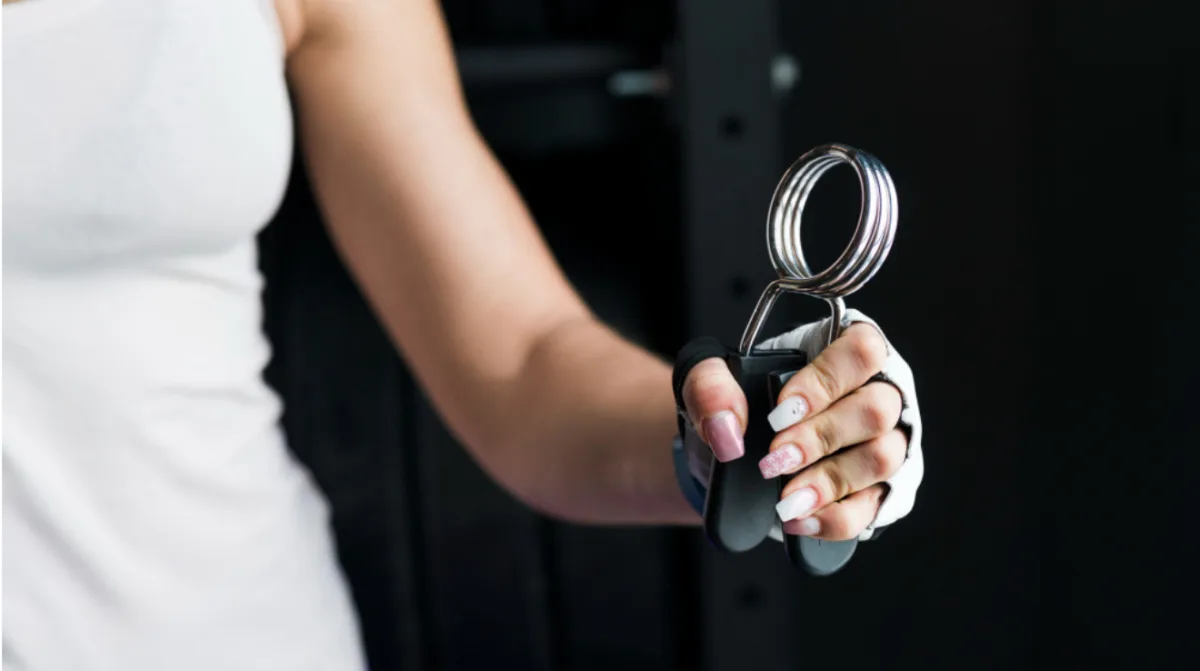
Which is why the humble hand grip strengthener keeps turning up in the hands of people who know what they’re doing. It costs less than a decent dinner, needs no sizing, works for a powerlifter and a rock climber and someone recovering from a wrist injury, and it targets something almost everyone who trains is quietly neglecting.
Grip is the gap in most people’s training
Ask a regular gym-goer what’s limiting their deadlift and you’ll hear about hamstrings or lower back. Often it’s neither. The bar slips out of their hands before the muscles that lift it have anything left to give, so they either strap up or stop the set early. Same story with heavy rows, farmer’s walks, and pull-ups past a certain rep count. The forearms give out first and everything above them goes untrained.
Almost nobody trains grip directly. It gets treated as a byproduct of everything else, which works up to a point and then stops working. A hand grip strengthener fixes that in a way that costs almost nothing in time or recovery, because you can use one while doing something else entirely.
For climbers the connection is obvious. For anyone doing martial arts, tennis, cricket, or golf it matters more than they usually credit. And there’s a whole category of people who don’t lift at all but use their hands hard for a living, from guitarists to hairdressers to anyone typing all day, for whom the balance between grip and forearm endurance is a genuine quality-of-life issue.
The health angle, honestly stated
Grip strength has become one of the more interesting measurements in health research over the last decade. Large population studies have found it tracks surprisingly well with all sorts of outcomes, which is why you’ll see it used as a quick proxy for general physical condition in clinical settings. It’s cheap to measure and it correlates with a lot.
Worth being precise about what that means, though. Grip strength being a useful indicator of overall condition is not the same as squeezing a gripper making you healthier across the board. It’s a marker, not a magic lever. What’s fair to say is that maintaining hand and forearm strength as you age has real practical value — carrying shopping, opening jars, catching yourself when you stumble — and that it’s one of the easier things to keep on top of. Most people lose it by default simply because nothing in modern life demands it.
Why it works so well as a gift specifically
The practical case is strong. It’s inexpensive enough that you can buy a good one rather than a compromise. It doesn’t require you to know their size, their brand loyalties, or what they already own. It’s small enough to post. And it doesn’t sit in a corner gathering dust the way most fitness gifts do, because it lives on a desk or in a bag and gets used in the gaps of the day.
There’s also something to be said for a gift that doesn’t imply anything. Fitness presents can carry an unfortunate subtext. A hand grip strengthener carries none of that, since nobody reads it as a comment on the recipient’s condition. It’s a piece of kit for someone who likes kit.
What to look for
If you’re buying for someone else, get an adjustable one. You almost certainly don’t know their current level, and adjustable models typically span something like 10kg to 60kg of resistance, which covers a beginner and a fairly strong adult in the same device. Fixed-resistance grippers are excellent, but they’re a purchase for someone who already knows the number they want.
Check the build. The failure point on cheap units is almost always the spring mechanism or the pivot, and a gripper that gets gritty or loosens after a few weeks will simply stop being used. Metal springs with a solid housing outlast plastic. Handles that are moulded and slightly textured beat bare metal, which gets uncomfortable at higher resistances fast.
Consider adding a set of finger extensor bands if the budget allows. Gripping trains the closing muscles only, and training one direction hard without the other is how people end up with forearm pain. Extensor bands cost very little and make the gift more thoughtful than it looks.
If you want a straightforward option to start from, this hand grip strengthener covers the adjustable range most people need.
One note on actually using it
Tell them, or include a note: this responds badly to being hammered daily to failure. Hands and forearms have a lot of small tendons and they don’t recover as quickly as bigger muscles. A few focused sets several times a week beats squeezing it absent-mindedly for an hour in front of the television, and it’s considerably less likely to leave them with a sore elbow.
Beyond that, it’s about as low-friction as fitness equipment gets. No setup, no space required, no subscription, nothing to charge. For a gift that costs what it costs, a hand grip strengthener earns its place better than almost anything else in the category.